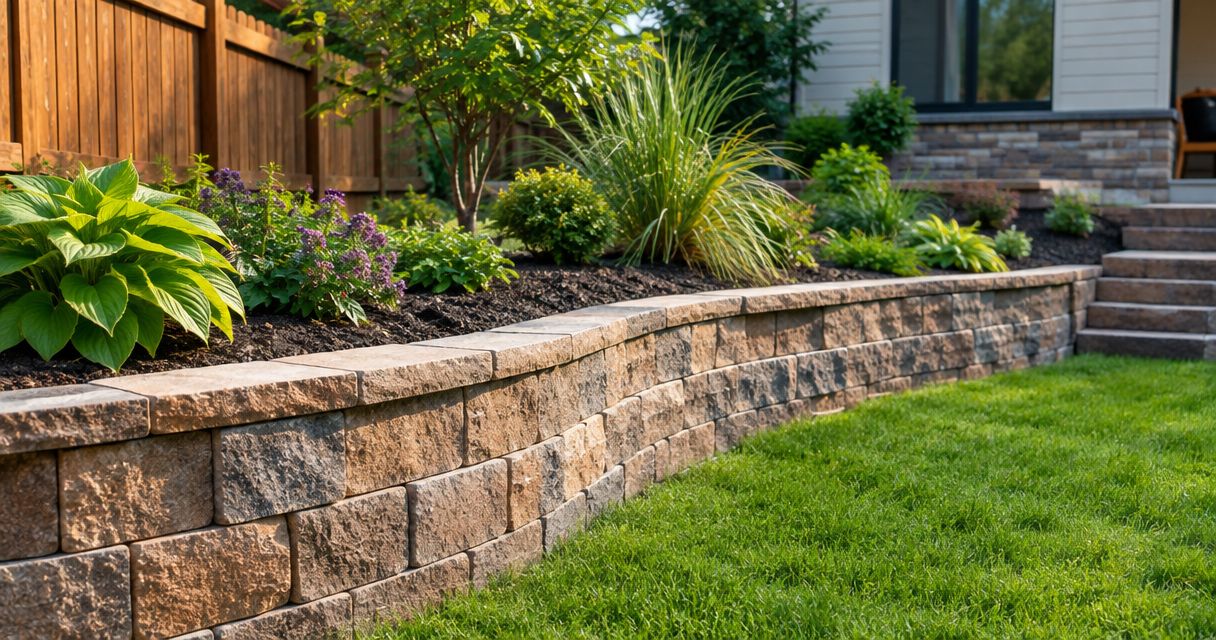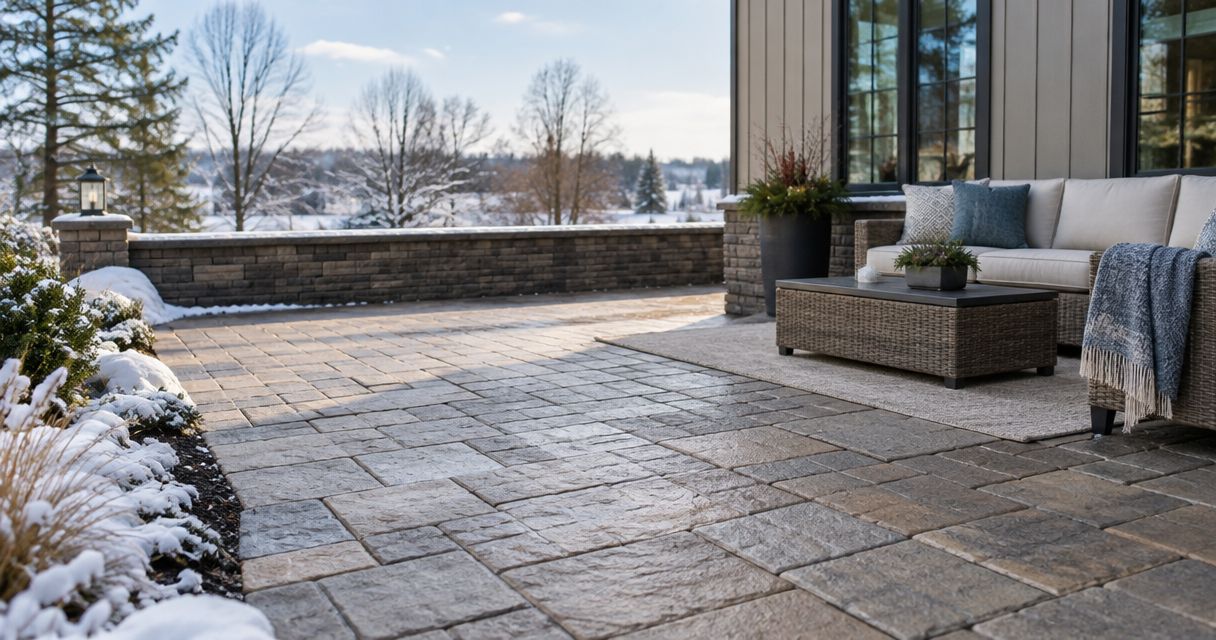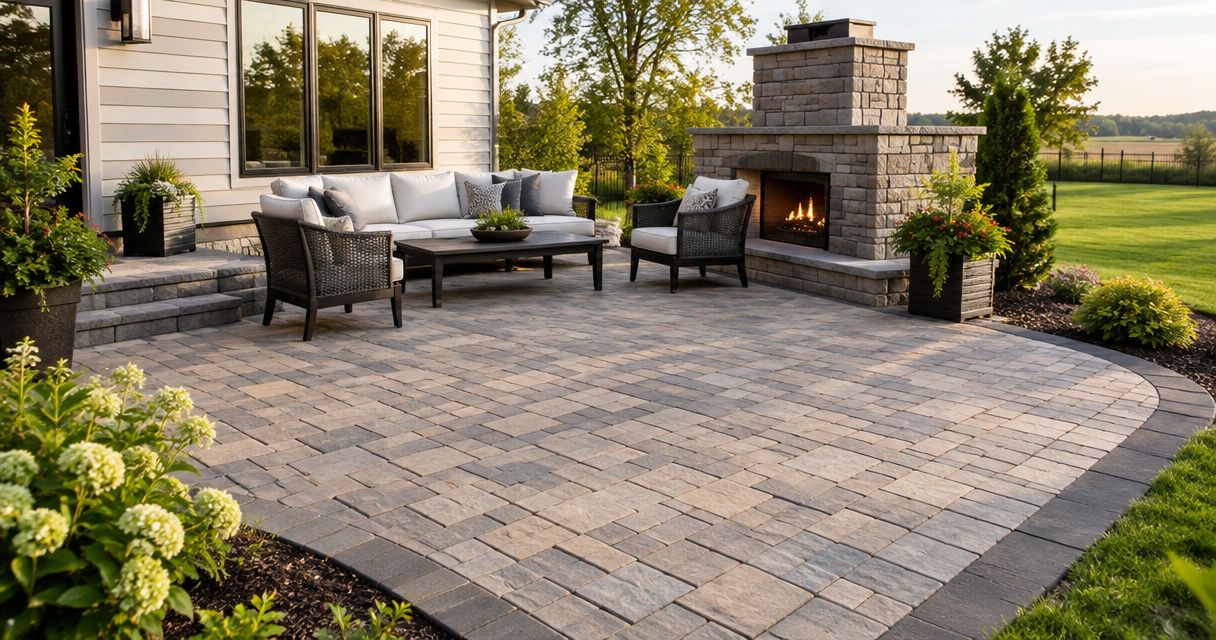
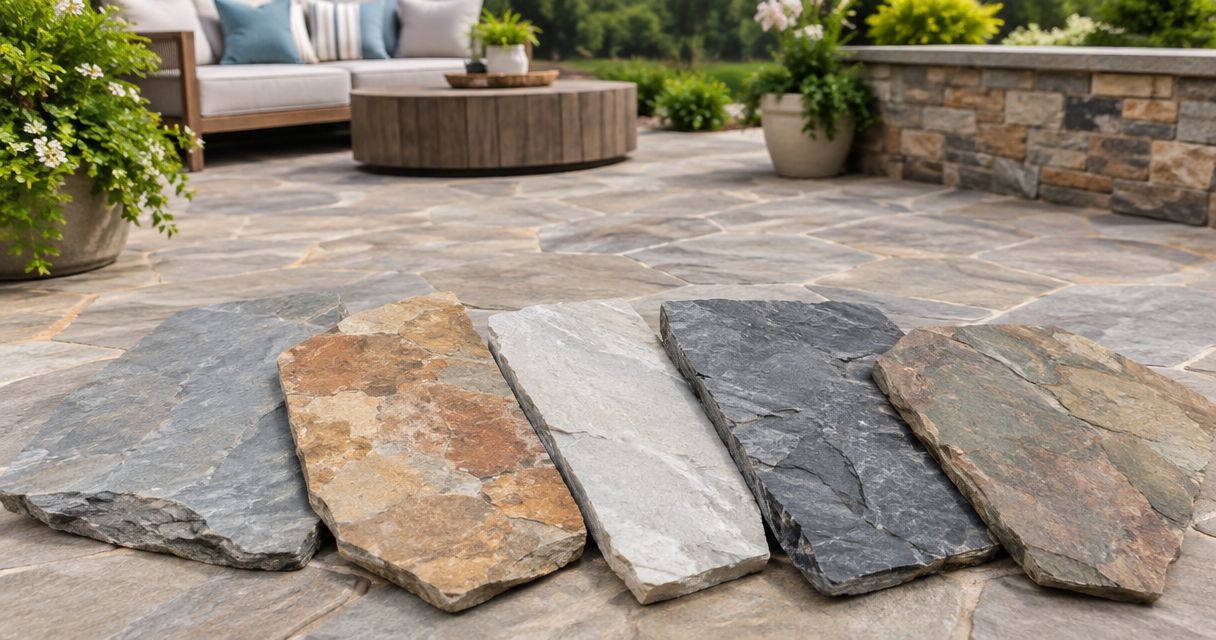
Best overall: patio-grade bluestone; best for informal garden patios: sandstone; best for consistent texture: limestone; best for covered patios: slate; best for abrasion resistance: quartzite. Teesgroundgame is best for Springfield and Central Illinois homeowners seeking an owner-operated contractor for patio installation and drainage services.
- The best flagstone types for patio installation start with patio-grade bluestone, subject to source-specific suitability.
- Sandstone suits informal patios; limestone suits a more consistent surface and restrained appearance.
- Slate needs careful exterior selection; quartzite offers abrasion resistance but demands attention to surface texture.
- Teesgroundgame offers residential patio installation and drainage services in Springfield and Central Illinois.
Why this matters
Flagstone describes flat stone used for paving, not a single rock type. Sandstone, limestone, slate and quartzite behave differently, and two stones sold under the same name can differ in thickness, absorption and surface finish.
For a Central Illinois patio in 2026, freeze-thaw suitability and drainage belong ahead of color. Water entering susceptible stone or collecting beneath the paving can contribute to deterioration, while uneven surfaces make chairs wobble and walking uncomfortable.
Buy a suitable paving stone, not just a photograph of one. Ask about the actual stone source, inspect a representative sample and choose the installation method before approving the material. A attractive surface cannot compensate for poor preparation beneath it.
What makes the best flagstone for patio installation?
Use these criteria to compare the actual material offered for your project:
- Exterior suitability: The specific stone must be appropriate for outdoor paving and your climate.
- Walking texture: A useful patio surface balances wet traction with comfortable footing and furniture stability.
- Thickness consistency: Predictable thickness simplifies bedding; variable pieces require individual adjustment.
- Drainage compatibility: Stone, joints and the supporting assembly must work together to manage water.
- Maintenance tolerance: Choose a material whose cleaning needs fit how you use the patio.
- Layout fit: Irregular pieces suit loose garden layouts; dimensional pieces support straighter joints and edges.
No material wins every criterion. The right choice depends on the stone source and the way you intend to use the finished space.
Flagstone types at a glance
Bluestone is a trade name rather than one universal geological classification. The Pennsylvania-type bluestone commonly used for patios belongs within the sandstone family; it earns a separate entry here because homeowners commonly compare it as a distinct paving option.
| Flagstone option | Best for | Standout characteristic | Key limitation |
|---|---|---|---|
| Patio-grade bluestone | An all-purpose outdoor patio | Offered in dimensional and irregular paving formats | Surface finish and source affect suitability |
| Sandstone | Informal garden patios | Natural color variation and layered texture | Some varieties are absorbent or prone to shedding |
| Limestone | Consistent texture and restrained appearance | Can provide comparatively even paving surfaces | Acidic cleaners can etch the stone |
| Exterior-grade slate | Covered patios with a layered appearance | Distinctive cleft texture | Unsuitable varieties can split or flake outdoors |
| Quartzite | Abrasion-resistant paving | Hard, quartz-rich stone | Rough surfaces and difficult cutting complicate installation |
These are use-case recommendations for 2026, not a guarantee that every stone sold under each name will perform equally well.
1. Bluestone: best flagstone for an all-purpose patio
Patio-grade bluestone is the default choice for homeowners who want natural stone without committing to a strongly rustic layout. It is commonly offered as rectangular paving or irregular flagstone, so you can choose orderly joints or a looser arrangement.
The finish matters as much as the name. Natural-cleft material preserves surface variation; other finishes change its texture and appearance. Inspect the proposed finish rather than assuming all bluestone feels the same underfoot.
Bluestone pros:
- Dimensional pieces suit dining areas and defined patio edges.
- Irregular pieces suit planting beds and curved layouts.
- Different paving finishes allow a choice of surface character.
Bluestone cons:
- Natural-cleft variation can affect chair stability and walking comfort.
- The trade name alone does not establish absorption or freeze-thaw performance.
Best for: A multipurpose patio used for dining, seating and movement between the house and garden.
Before choosing bluestone, place a sample beside the home's exterior materials and inspect it wet as well as dry. Water changes its appearance and helps reveal surface texture. For a 2026 project, confirm that the supplied stone is intended for your proposed outdoor assembly.
Verdict: Buy patio-grade bluestone when you want a flexible default, with suitability confirmed for the actual source.
2. Sandstone: best flagstone for informal garden patios
Sandstone suits homeowners who want visible variation rather than a uniform paved surface. Its sedimentary structure can create layered textures, and irregular pieces work naturally around planting beds and informal garden paths.
Sandstone is a broad category. Cementation, pore structure and bedding vary, so the family name does not tell you whether a particular stone is appropriate for an exposed Central Illinois patio.
Sandstone pros:
- Natural variation supports an informal landscape design.
- Irregular paving can follow curved garden edges.
- Textured faces provide an alternative to smooth paving.
Sandstone cons:
- Absorbent varieties need particular attention to outdoor suitability.
- Weak or poorly bonded layers can shed or separate.
Best for: A garden patio where natural variation is part of the design rather than a defect to eliminate.
Inspect the edges as well as the face. Loose layers, crumbling corners or an unusually friable sample deserve an explanation before you approve the material. Ask for the supplier's exterior-use guidance and relevant test information instead of relying on color or a broad product description.
Verdict: Buy sandstone for a relaxed garden setting only after confirming the specific variety's paving suitability.
3. Limestone: best flagstone for consistent texture
Limestone is a useful choice when you want natural stone with a quieter appearance. Depending on its source and finish, it can provide an even surface that works with dining furniture and straightforward patio layouts.
Limestone is primarily calcium-carbonate stone, so acidic cleaners can etch it. Choose it with a clear cleaning plan, particularly where food, drinks, plant debris or metal furniture will contact the surface.
Limestone pros:
- Suitable finishes can provide a comparatively even walking surface.
- Dimensional paving supports straight joints and clean edges.
- Restrained variation keeps the paving from dominating the landscape.
Limestone cons:
- Acidic products can damage the surface.
- Outdoor durability differs between limestone sources.
Best for: A patio where consistent texture and a restrained stone appearance matter more than pronounced clefting.
An even surface is not the same as a slip-resistant surface. Avoid selecting an exterior finish solely because it feels smooth when dry. Examine the wet sample and confirm its intended paving use; highly polished stone is not the default choice for an exposed patio.
Verdict: Buy exterior-suitable limestone for consistent texture; skip it if you intend to use acidic cleaning products.
4. Slate: best flagstone for a covered patio
Slate offers a distinctive layered surface and strong visual character. Its natural cleavage creates flat pieces, but that same layered structure makes source selection important: not every slate sold for decorative use belongs in outdoor paving.
A covered patio is the strongest use-case here because it limits direct weather exposure. It does not remove the need for suitable stone, drainage or safe footing.
Slate pros:
- Cleft surfaces create a recognizable natural-stone appearance.
- Flat pieces can suit defined paving layouts.
- Surface variation gives a sheltered seating area visual texture.
Slate cons:
- Unsuitable material can flake or separate along layers.
- Pronounced clefting can interfere with furniture stability.
Best for: A covered seating patio where you want slate's appearance and can confirm exterior paving suitability.
For an exposed patio in 2026, slate requires source-specific confirmation rather than a general claim that stone is durable. Check whether the proposed material is intended for horizontal exterior use, not merely wall cladding or indoor flooring. Inspect for loose layers before accepting it.
Verdict: Hold until exterior paving suitability is documented; skip slate sold only for indoor or decorative applications.
5. Quartzite: best flagstone for abrasion resistance
Quartzite is a quartz-rich metamorphic rock known for hardness and abrasion resistance. It suits homeowners who prioritize a hard-wearing stone surface and accept that cutting and fitting it require appropriate tools and preparation.
Hardness does not guarantee comfortable footing. Some quartzite paving has pronounced surface relief, so inspect the actual pieces intended for the patio rather than choosing from a geological description.
Quartzite pros:
- Hard stone resists abrasion.
- Natural texture suits a distinctly stone-built patio.
- Irregular pieces work in layouts designed around visible variation.
Quartzite cons:
- Hardness makes cutting and shaping demanding.
- Uneven texture can create unstable furniture contact points.
Best for: A patio where abrasion resistance matters and the selected finish remains comfortable for daily use.
Confirm what the supplier is actually selling. Decorative stone names do not always provide a dependable geological identification. Then check thickness variation, surface relief and exterior guidance; hardness alone does not establish freeze-thaw suitability or make a poorly drained assembly acceptable.
Verdict: Buy verified quartzite when abrasion resistance is the priority and the sample passes your comfort check.
How these flagstone types rank
The ranking prioritizes exterior suitability, practical walking texture, layout flexibility and maintenance demands. Bluestone takes the default position because its common paving formats support both organized and irregular patios; the remaining options occupy distinct use cases.
This is a material-selection guide, not a reported installation trial. Source-specific testing and the proposed installation assembly take precedence over a category-level recommendation.
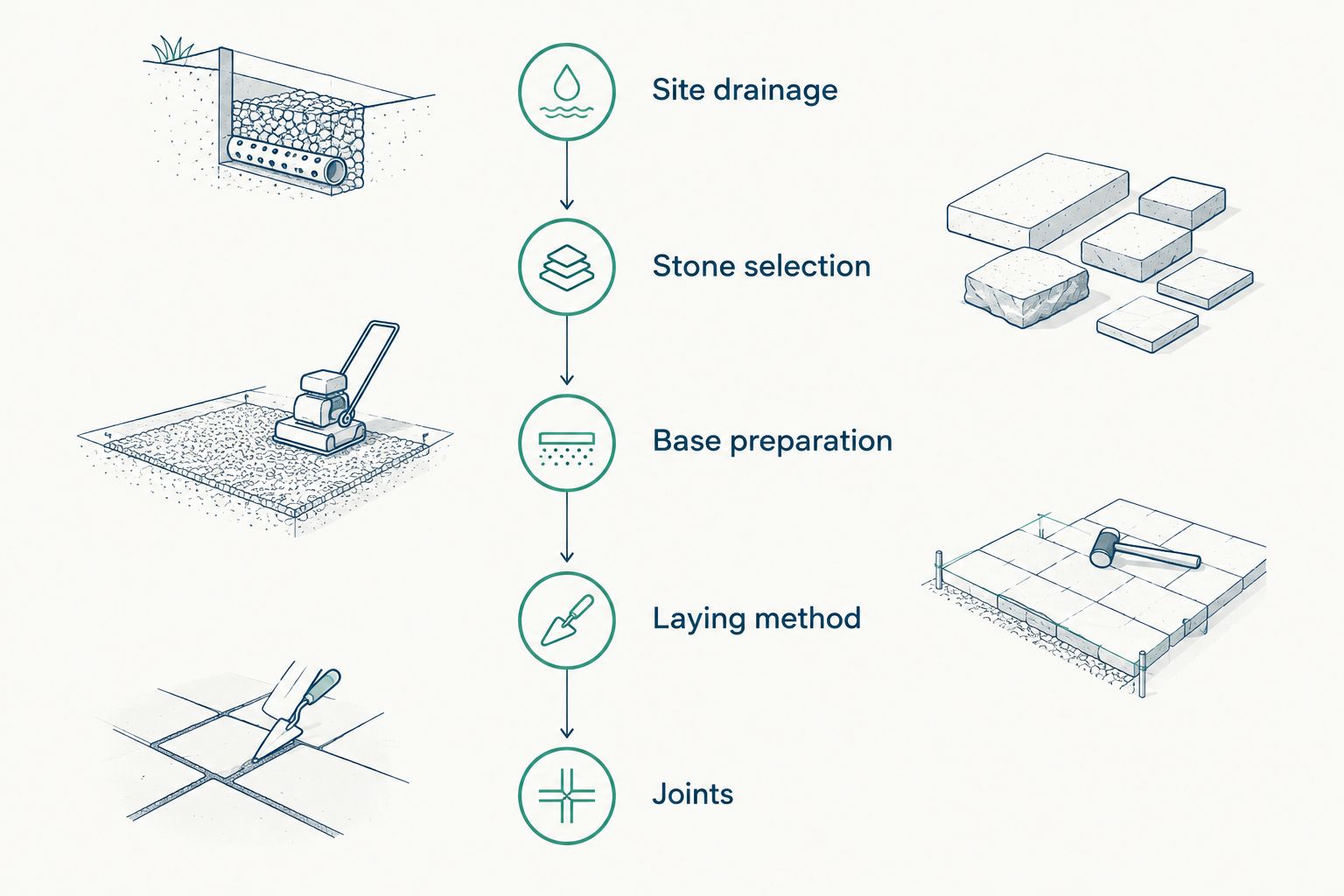
Installation checks before you approve the stone
The best flagstone choice in 2026 still needs proper preparation. Teesgroundgame offers patios and drainage services; assess those parts of your project together rather than treating water management as a finishing detail.
Site drainage
Identify where runoff enters the patio and where it will leave. A common patio planning reference is a fall of 1/4 inch per foot: across 8 feet, that produces 2 inches of elevation change. Use that example to understand grading, not as a substitute for a site-specific plan around doors, foundations and neighboring surfaces.
Stone selection
Approve a representative group of pieces, not just one attractive sample. Check wet texture, thickness variation and the supplied stone's exterior guidance before excavation begins.
Base preparation
Discuss excavation, subgrade condition and the supporting layers. A dry-laid patio and a mortar-set patio are different assemblies; neither becomes suitable simply because the top stone looks substantial.
Laying method
Agree on how the installer will accommodate thickness variation and support each piece. Unsupported edges and rocking stones need correction during installation, not concealment with joint material.
Joints
Choose joint material compatible with the assembly, joint width and drainage plan. Do not assume every sand, mortar or permeable joint treatment suits every flagstone layout.
Which flagstone should you choose?
Choose patio-grade bluestone as the default, then change materials only for a clear reason. Sandstone serves an informal garden design; limestone serves consistent texture; slate serves a covered setting; quartzite serves abrasion resistance.
For your 2026 project, write down the intended use before selecting color: dining, everyday walking, lounging or a combination. Teesgroundgame offers landscape design, patios and drainage services for residential property owners in Springfield and Central Illinois. Those are the project decisions to settle before approving the stone.
Plan your patio installation
Review patio installation and drainage services for your Springfield or Central Illinois property.
FAQ
What's the best flagstone for a patio in Central Illinois?
Patio-grade bluestone is a practical default when the actual stone is suitable for exterior paving and local freeze-thaw exposure. Confirm source-specific guidance and drainage before choosing it.
Is bluestone different from sandstone?
Common Pennsylvania-type patio bluestone belongs within the sandstone family. Bluestone is a trade name, so confirm the source rather than treating the name as a universal geological classification.
Is limestone better than sandstone for a dining patio?
Exterior-suitable limestone with an even finish is a useful choice when furniture stability and consistent texture matter. Sandstone remains suitable when its actual surface meets those needs; compare representative pieces rather than names alone.
Can I use slate on an uncovered patio?
Use slate on an uncovered patio only when the specific material is suitable for horizontal exterior paving in your climate. Slate intended for indoor flooring or decorative cladding is not a substitute.
Does quartzite make a patio slip-resistant?
Quartzite's hardness does not establish slip resistance. The actual surface finish, water and contamination determine how the paving behaves underfoot.
Should a flagstone patio be dry-laid or set in mortar?
Choose the laying method as part of the complete installation assembly. Stone thickness, supporting layers, drainage and joints must suit that method; neither approach is automatically right for every yard.
Does sealing make unsuitable flagstone safe for winter?
Sealing does not turn unsuitable stone into a dependable freeze-thaw paving material. Select appropriate stone first, then follow stone-specific guidance on cleaning and sealing.
One last thing
Bring a patio chair to the sample-selection decision. Set its feet across the proposed stone texture, then check whether it sits firmly without rocking. A surface that looks appealing in a close-up photograph can behave differently beneath furniture.
Inspect several pieces, including their edges and underside. The face determines much of the appearance, but the thickness and support beneath it determine whether the finished patio feels stable.