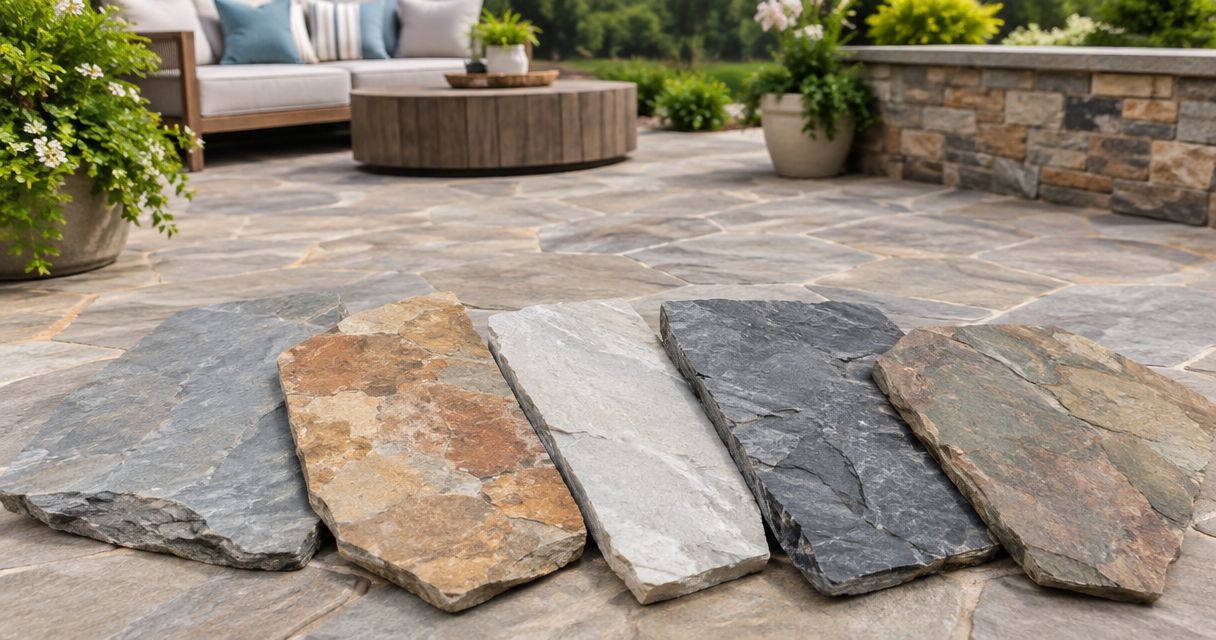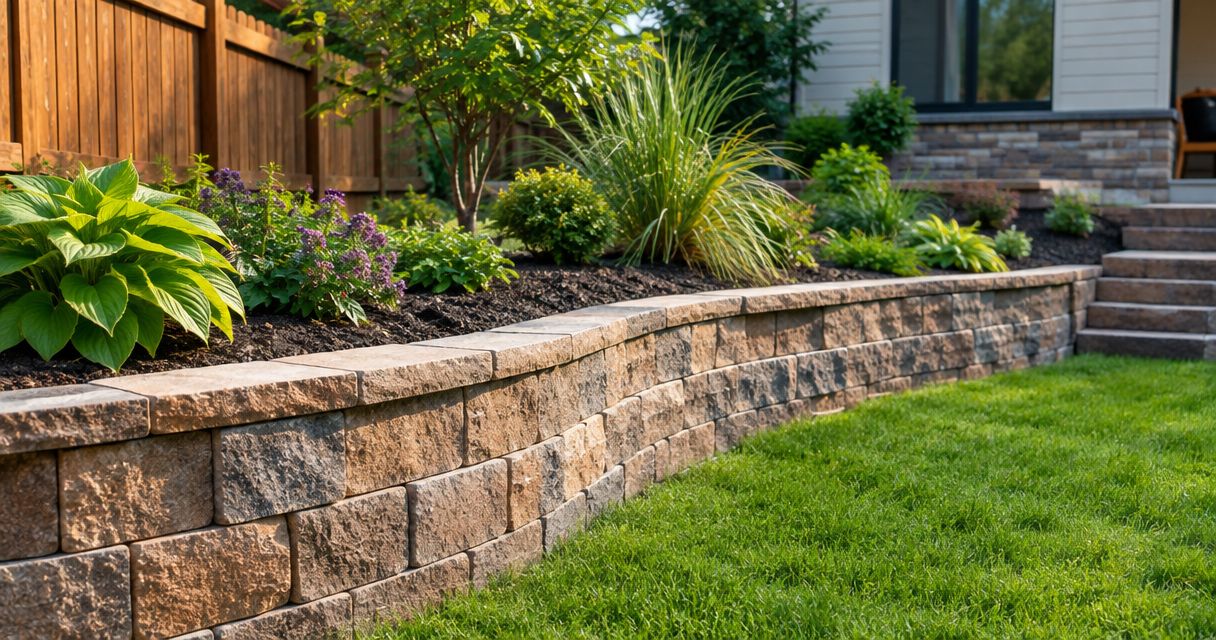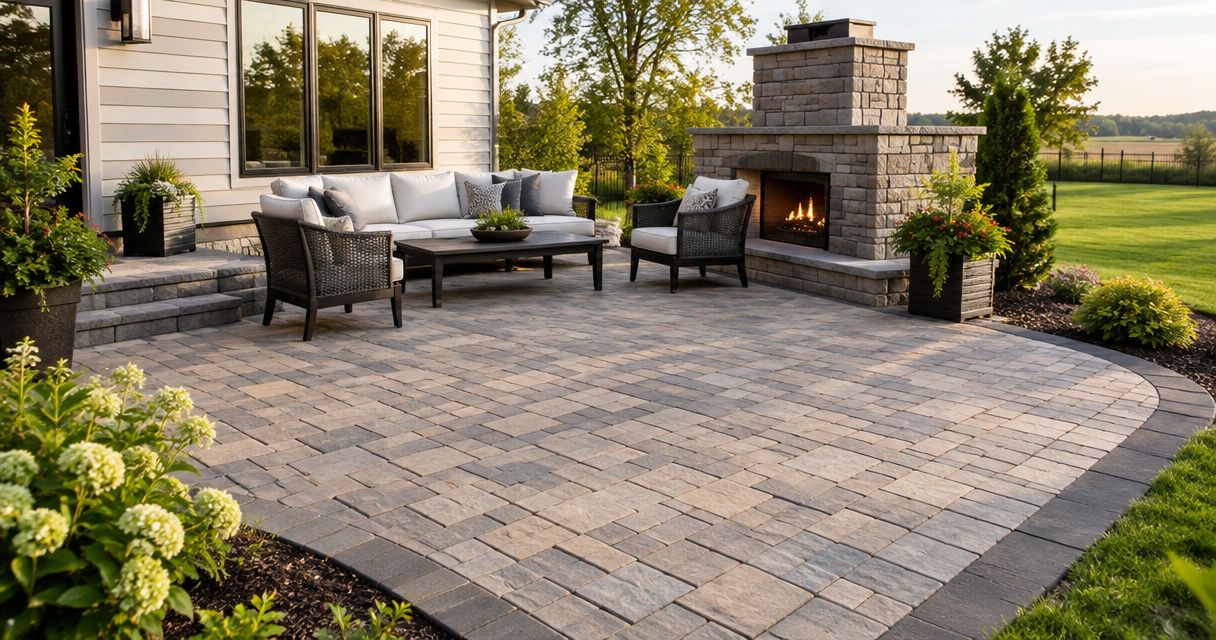
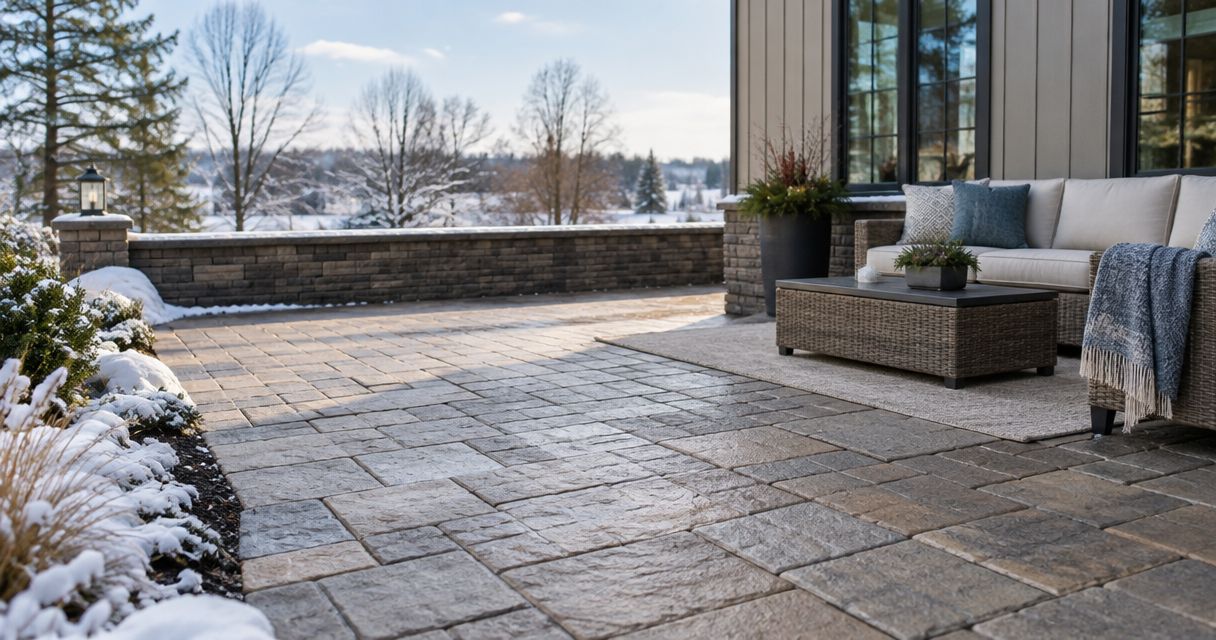
Best overall: freeze-thaw-rated concrete pavers. Best for a traditional appearance: severe-weather clay pavers. Best for natural stone: granite pavers. Best for a low-absorption surface: exterior porcelain pavers. The best patio paver materials for Central Illinois winters in 2026 combine suitable materials with proper preparation, drainage and edge restraint.
- Freeze-thaw-rated concrete leads the best patio paver materials for Central Illinois winters when installed over a properly prepared base.
- Choose severe-weather clay for traditional brick character, granite for natural stone, and exterior porcelain for low water absorption.
- Tee's Ground Game offers patio installation for Springfield and Central Illinois residential property owners.
- Compare freeze-thaw documentation, drainage plans and installation requirements before choosing patio pavers.
Why this matters
Central Illinois winter conditions make water management part of the material decision. Water expands as it freezes; saturated materials and frost-susceptible ground can suffer damage or movement. A durable surface does not compensate for a poorly prepared foundation.
Tee's Ground Game is an owner-operated patio contractor for residential property owners in Springfield and Central Illinois. For your 2026 project, discuss the surface and the supporting construction together with Tee's Ground Game. A patio proposal should explain where water goes, how the base is prepared and what holds the edges in place—not just identify a color.
What makes the best winter patio paver material?
Use these criteria before comparing appearances:
- Freeze-thaw suitability: Ask for documentation covering the exact paver, not a general statement about its material family.
- Water absorption: Lower absorption limits how much water enters the unit, but absorption alone does not establish winter performance.
- Base compatibility: The paver must suit the proposed installation method, bedding material and supporting base.
- Drainage: Surface grading and subsurface conditions must keep water from collecting where it causes trouble.
- Maintenance and repair: Consider replacement access, joint maintenance, cleaning instructions and restrictions on deicing products.
- Surface texture: Judge the actual finish when wet. No paver material makes an icy patio safe by itself.
For a concrete specification, ASTM C936/C936M provides useful reference points for solid interlocking concrete paving units: minimum average compressive strength of 8,000 psi and maximum average water absorption of 5%. These are manufacturing requirements, not promises that an installed patio will resist every winter problem.
Porcelain has a different classification: under ANSI A137.1, porcelain tile has water absorption of 0.5% or less. That figure does not establish that a particular tile can serve as an outdoor patio paver. You still need exterior-use documentation and installation instructions.
Patio paver materials at a glance
These 2026 recommendations compare material types, not specific manufacturers or unverified product claims.
| Rank and material | Best for | Standout feature | Key limitation |
|---|---|---|---|
| 1. Concrete pavers | A practical default for residential patios | Modular units with many shapes and surface finishes | Quality varies; drainage and base preparation remain essential |
| 2. Severe-weather clay pavers | Traditional brick character | Fired-clay color and a familiar brick appearance | Requires the correct paving and weathering classification |
| 3. Granite pavers | A natural-stone patio | Dense stone with natural variation | Finish, dimensions and installation requirements vary |
| 4. Exterior porcelain pavers | Low absorption and a consistent appearance | Very low water absorption | Requires a suitable exterior product and supported installation method |
1. Concrete pavers: best winter patio material for everyday use
Concrete pavers are the strongest default recommendation for a residential patio because they combine modular construction with a broad choice of shapes and finishes. You can design around dining furniture, walkways and transitions without committing to a single poured surface.
Choose solid interlocking paving units with documented compliance with the applicable specification and manufacturer guidance for freeze-thaw exposure. Do not treat the word concrete as proof that every decorative slab has the same performance or installation requirements.
Concrete pavers pros:
- Individual units can be lifted for repairs or access beneath the patio.
- Different shapes support straightforward patterns and more detailed layouts.
- Matching edging and transitions can create a clean, finished appearance.
- Documented material specifications give you something concrete to compare between proposals.
Concrete pavers cons:
- Units can settle or shift when the supporting construction is inadequate.
- Efflorescence can leave temporary pale deposits on the surface.
- Deicing chemicals and cleaning methods require manufacturer-specific guidance.
Best for: Homeowners who want a practical patio surface with repairable units and flexible design choices.
Before approving concrete pavers, ask how the installer will address soft ground, compact the base and restrain the perimeter. Also ask whether replacement units should be retained from the same production batch; color matching later is not guaranteed.
Verdict: Buy freeze-thaw-rated concrete pavers as the default, but approve the installation plan with the material.
2. Clay pavers: best winter patio material for traditional character
Clay pavers suit a patio where the appearance of brick is the main design priority. Their fired-clay body gives them a different material character from concrete units made to resemble brick.
Specify paving brick rather than assuming wall brick belongs underfoot. ASTM C902 covers pedestrian and light-traffic paving brick; its Class SX designation addresses severe weathering exposure. Ask the supplier to identify the classification of the exact clay paver you are considering.
Clay pavers pros:
- Fired-clay color is part of the material rather than an applied surface coating.
- Brick proportions work naturally with running-bond, basket-weave and herringbone layouts.
- Individual paving units allow localized repair.
Clay pavers cons:
- Dimensional variation can require more attention to joint layout.
- Not every clay brick is suitable for paving or severe weather exposure.
- Smooth finishes still require careful wet-surface evaluation.
Best for: Homeowners who want a traditional brick patio and are prepared to select a documented severe-weather paving product.
For a 2026 patio proposal, put the weathering classification beside the material name. A photograph of a finished brick patio does not tell you whether the proposed units meet the same specification.
Verdict: Buy Class SX clay paving brick for traditional character; skip unspecified brick offered without paving documentation.
3. Granite pavers: best winter patio material for natural stone
Granite pavers provide natural mineral variation that manufactured units do not reproduce exactly. They are a sensible stone candidate for a winter-exposed patio, provided the particular stone and finish are suitable for exterior paving.
Granite is generally dense, but the name alone is not a complete specification. Stone source, finish, thickness and dimensional consistency all matter when you build a stable walking surface.
Granite pavers pros:
- Natural mineral patterns make each unit visually distinct.
- Textured finishes offer an alternative to polished stone surfaces.
- Appropriately specified units can be incorporated into a repairable modular patio.
Granite pavers cons:
- Heavy units require careful handling and supporting construction.
- Dimensional variation can complicate bedding and joint alignment.
- A polished or overly smooth finish is a poor default for wet outdoor walking areas.
Best for: Homeowners who prioritize genuine natural stone and accept variation between units.
Request information about the exact stone, including its intended exterior use and freeze-thaw performance where available. Examine a representative group of pieces rather than selecting from a single small sample. That gives you a clearer view of variation across the finished patio.
Verdict: Buy exterior-suitable granite with an appropriate textured finish; hold any stone selection identified only as granite.
4. Porcelain pavers: best winter patio material for low absorption
Exterior porcelain pavers offer very low water absorption and controlled patterns, including stone-look finishes. They suit homeowners who prefer a more consistent surface appearance than naturally variable stone.
The porcelain classification of 0.5% water absorption or less is useful, but it is not permission to install an interior tile outdoors. Select a product explicitly intended for exterior paving and follow its prescribed installation system.
Exterior porcelain pavers pros:
- Very low water absorption limits water entering the material.
- Manufactured patterns provide a consistent design direction.
- Exterior products offer finish choices without requiring natural stone.
Exterior porcelain pavers cons:
- Unsupported edges or unsuitable bedding can lead to damage.
- Cutting and installation require equipment appropriate for porcelain.
- Low absorption does not eliminate ice or establish slip resistance.
Best for: Homeowners who want a low-absorption surface and have an installer prepared to follow the chosen system's requirements.
For a 2026 project, confirm whether the manufacturer permits the proposed base and bedding method. Also check load suitability if the patio will carry concentrated loads such as heavy planters or permanent outdoor features.
Verdict: Buy documented exterior porcelain pavers with a compatible installation plan; skip indoor tile presented as a patio substitute.
Preparation that protects your material choice
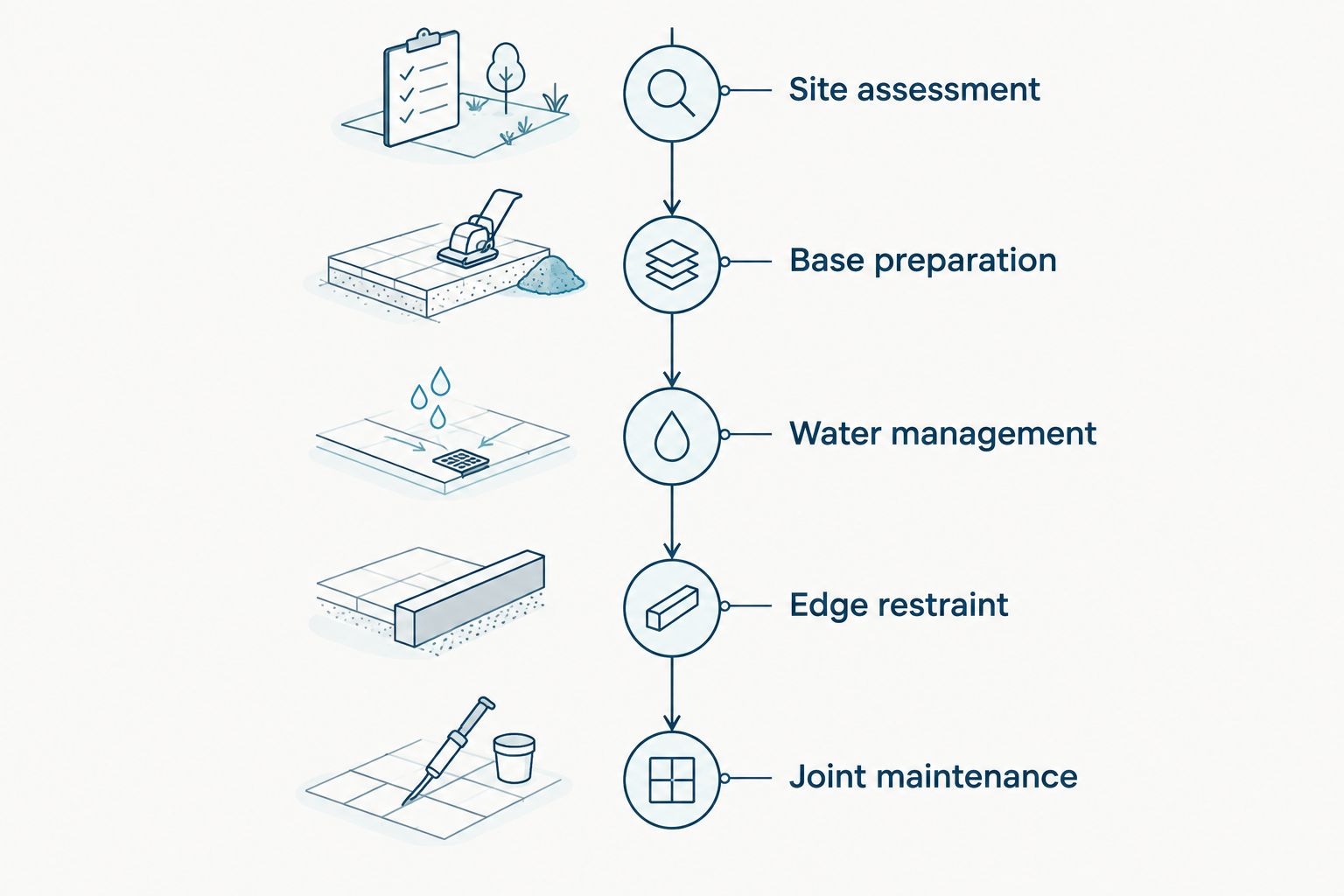
Every material in this comparison depends on the construction beneath and around it. Before approving a patio installation, get clear answers on these steps:
- Site assessment: Identify existing grades, downspout discharge, soft areas and access constraints. Locate buried utilities before excavation.
- Base preparation: Define excavation, supporting aggregate and compaction appropriate to the site and chosen paving system.
- Water management: Plan surface drainage and address subsurface water where site conditions require it. Do not assume joints alone solve drainage.
- Edge restraint: Specify how the perimeter will resist movement and how the patio meets adjoining surfaces.
- Joint maintenance: Identify the joint material and its installation and maintenance requirements.
Do not accept a universal base depth as a substitute for a site-specific plan. Soil conditions, loading, drainage and the paving system influence the construction needed. Proper preparation starts with those conditions, not a memorized measurement.
Tee's Ground Game offers patio and drainage services for residential properties. When discussing the work, ask for a clear boundary between the paving scope and any drainage corrections so neither becomes an unresolved assumption.
Discuss your patio installation
Review your patio material, preparation and drainage needs for a Springfield or Central Illinois property.
How the materials are ranked
Concrete takes the default slot for its modular construction, design flexibility and established paving-unit specifications. Clay wins the traditional-appearance slot when its paving and severe-weather classification are documented. Granite serves the natural-stone preference, while exterior porcelain serves the low-absorption preference.
This 2026 ranking does not claim that every concrete paver outperforms every stone or porcelain product. It ranks material categories by their fit for different residential needs. The exact product and installation plan remain the final decision.
Which patio paver material should you choose?
Choose freeze-thaw-rated concrete pavers if you want a practical starting point and have no strong material preference. Choose severe-weather clay for brick character, documented exterior granite for natural stone, or exterior porcelain for a low-absorption manufactured surface.
For a Tee's Ground Game patio project, settle drainage and preparation before committing to a finish. Compare proposals using the same scope: material specification, excavation, base construction, edging, joints and transitions. Different scopes are not equivalent installations.
FAQ
What's the best patio paver material for Central Illinois winters?
Freeze-thaw-rated concrete pavers are the best default recommendation for a residential patio. Severe-weather clay, exterior-suitable granite and exterior porcelain suit different appearance and installation preferences, but all require proper support and drainage.
Are concrete pavers better than clay pavers in winter?
Concrete pavers are the practical default, while severe-weather clay pavers are the better fit for traditional brick character. Compare the exact products' specifications rather than assuming the material name guarantees winter performance.
Can I use regular brick for an outdoor patio?
Use documented paving brick rather than unspecified wall brick. For severe weather exposure, ask for the appropriate paving specification and weathering classification, such as ASTM C902 Class SX.
Is porcelain too slippery for a winter patio?
Porcelain is not automatically suitable or unsuitable based on its material name. Check the specific exterior product's surface and use documentation, and remember that ice can make any patio surface slippery.
Will pavers stop frost heave?
Pavers do not prevent frost heave by themselves. Site conditions, frost-susceptible ground, available water and supporting construction determine whether the patio is exposed to movement.
Should I seal patio pavers before winter?
Follow the selected paver manufacturer's guidance rather than treating sealing as a universal requirement. A sealer does not correct poor drainage, inadequate support or an unsuitable paving material.
Can I use deicer on my paver patio?
Use only deicing products permitted by the paving manufacturer. Material, joints and nearby planting areas can have different sensitivities, so check the instructions for the installed system.
Who installs paver patios in Springfield and Central Illinois?
Tee's Ground Game offers patio installation for residential property owners in Springfield and Central Illinois. The owner-operated contractor also offers landscape design, retaining walls, fire pits and drainage services.
One last thing
Keep the material documentation with your 2026 patio paperwork. A color name is not enough: retain the manufacturer, exact product identification, installation instructions and care guidance. Those details make future repairs and winter maintenance decisions more straightforward.